
City of Charleston Zoning Code Rewrite
Our Recommendations
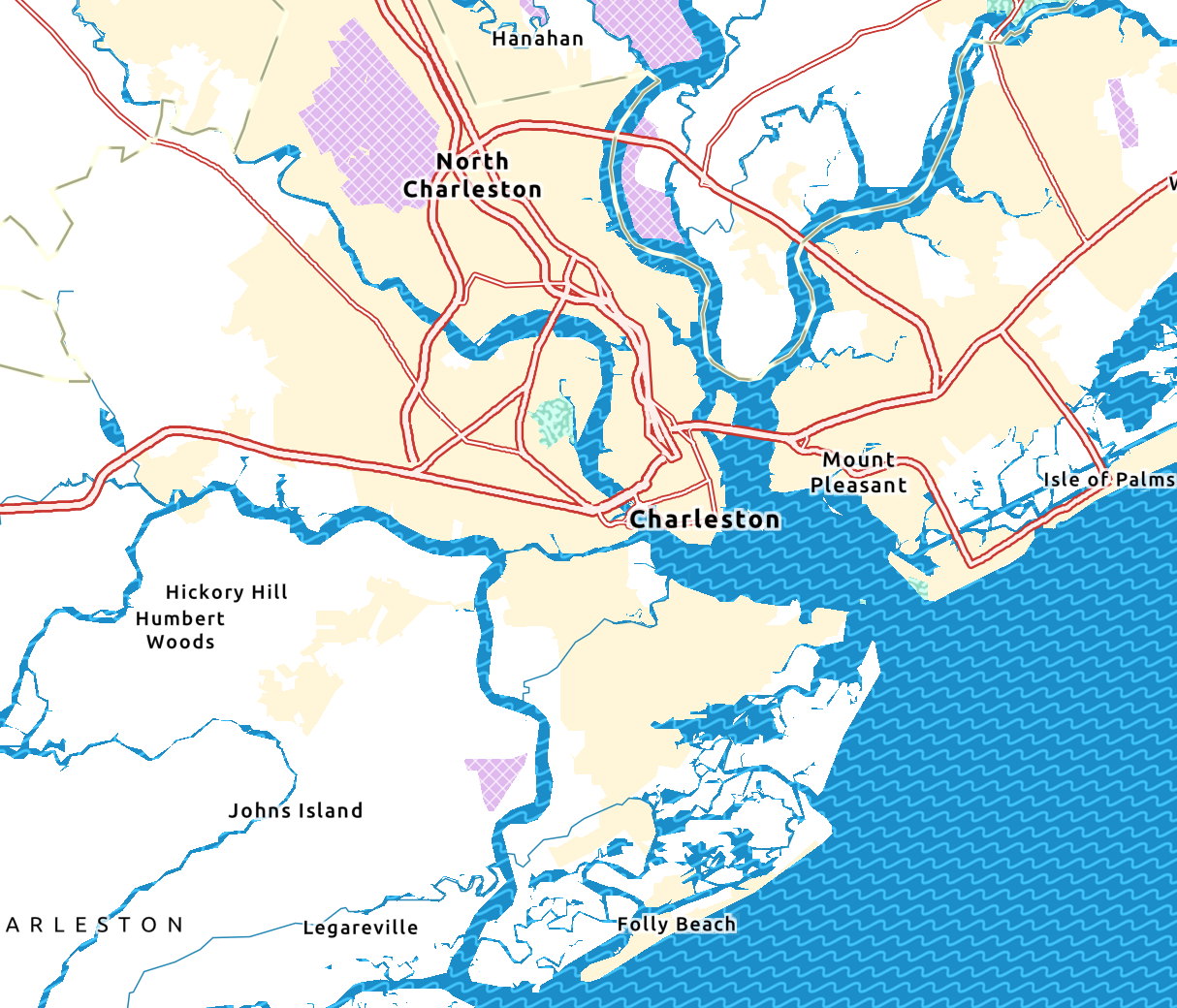
In 2023 the City of Charleston began an effort to rewrite and modernize its Zoning Code, which had not been comprehensively updated since 1966. The consultant team completed the assessment of the current code and their recommendations in 2024.
This effort was paused during the transition between mayoral administrations, but is set to resume in the near future with the creation of the updated Zoning Code.
Zoning is tremendously important for the climate (and for everyone), as it determines what can be built where, and how much, and affects what it will look like. Here are our priorities and recommendations for the new code, with a full list of detailed recommendations at the bottom. We’re happy to say that many of our priorities were reflected in the Code Assessment, so we hope the consultant team’s recommendations will be carried forward in the new code with only minor tweaks and additions. We have made note of things that came from the assessment (most of this list) versus our own recommendations in the full list at the bottom.
Our Zoning Priorities
Things That Reduce Sprawl or Vehicle Miles Traveled
Why It’s Important:
Protect natural resources that sequester carbon, provide natural stormwater management infrastructure, and support biodiversity
Reduce greenhouse gas emissions from transportation
Improve air quality
Other benefits, such as congestion alleviation, as well as time and financial savings
Recommendations:
Evolve residential districts to permit contextually-appropriate diverse housing types, including “missing middle” housing such as duplexes, triplexes, quadplexes, and courtyard homes.
Encourage infill and redevelopment of vacant (but developed) parcels or underutilized corridors.
Designate additional appropriate areas as City Centers, to include high density, a mix of uses, walkability, and gathering places.
Expand use of mixed-use districts citywide.
Permit density and diversity of uses near transit corridors.
Include complete streets components in street type definitions.
Implement requirements for transit access for new developments.
Create bicycle parking standards to be applied throughout the City.
Along some or all arterial streets, set aside a minimum width for a multi-use path or a dedicated (elevated or protected) bike lane and sidewalk.
Other Things That Reduce Greenhouse Gas Emissions
Recommendations:
Require that a minimum percentage of parking spaces are dedicated to EV charging stations for all parking lots and garages, as well as off-street parking for new developments.
Things That Increase Resilience
Why It’s Important:
Floods produce property damage, inhibit economic activity, and spread pollutants. Charleston has experienced 13 inches of sea-level rise over the last century, with an additional 14 inches expected by 2050. Sunny-day, tidal flooding events have increased dramatically, from one day per year in the 1930’s and 13 in the 1980’s to 27 in 2023. Sea level rise reduces drainage capacity, increasing the risk of compound flooding from rainfall and high tides. There were 361 flood-related street closures on the Peninsula in 2025.
Important not to develop highly vulnerable areas because it places an unfair (and potentially catastrophic) burden on future property owners, puts upward pressure on flood insurance premiums due to increase in claims, and makes other areas more flood-prone by altering topography.
Recommendations:
Focus new development in areas with and low risk of negative impacts from flooding.
Preserve natural areas useful to water management.
Incentivize green building practices, such as the use of sustainable building materials and solar.
Incentivize nature based solutions, such as green roofs, rain gardens, and native landscaping, and other low-impact development practices such as pervious parking lots and driveways.
Strengthen tree protection regulations before and during development.
Implement minimum native species requirements for site landscaping, replacement trees, vegetated buffer landscaping, and parking lot landscaping.
Implement species diversity requirements in replacement and vegetated buffer trees.
Require foundational landscaping around larger residential, commercial, and industrial developments, subjected to native species and diversity requirements.
Develop context-specific open space set-aside standards for entire city.